
Meet Rebecca Butler: Senior Director of Operations & Life Sciences

Rebecca Butler brings more than two decades of engineering, automation, and facilities leadership to Visions’ Life Sciences practice. Her clarity-driven, collaborative approach is shaping how we support scientific teams through some of the most complex operational transitions. We asked Rebecca a few key questions about her leadership philosophy and the future of Life Sciences operations.
How would you describe your leadership style when guiding teams through complex lab environments?
My leadership style is clarity driven and systems oriented. Teams perform at their best when expectations are clear, workflows are streamlined, and communication is transparent. I try to remove friction, meet people where they are, and create the structure that allows teams to deliver consistently, even in rapidly changing and highly technical environments.
Where do you see the biggest risks during Life Sciences transitions, and how can teams mitigate them?
The biggest risks come from gaps in clarity. When equipment and utility requirements, IT dependencies, and/or regulatory constraints are not fully understood upfront, those gaps turn into delays that disrupt laboratory work. Another major risk is underestimating how much coordination is required across facilities, IT, EHS, scientific teams, and vendors. The solution is early, disciplined planning and one integrated plan with clear ownership. When clarity and communication are strong, work continuity remains protected even during complex transitions.
What sets Visions apart in how you support scientific and technical teams?
Our team has real lab experience, so we speak the same language as the scientists we support. We understand their pressures and know how to translate scientific needs into structured, operational plans. Clients trust that we will anticipate risks, remove friction, and take much of the burden off their teams so they can stay focused on their deadlines. That combination of empathy, technical understanding, and operational rigor is what makes our approach unique.
What excites you most about where Visions is taking the Life Sciences vertical in 2026?
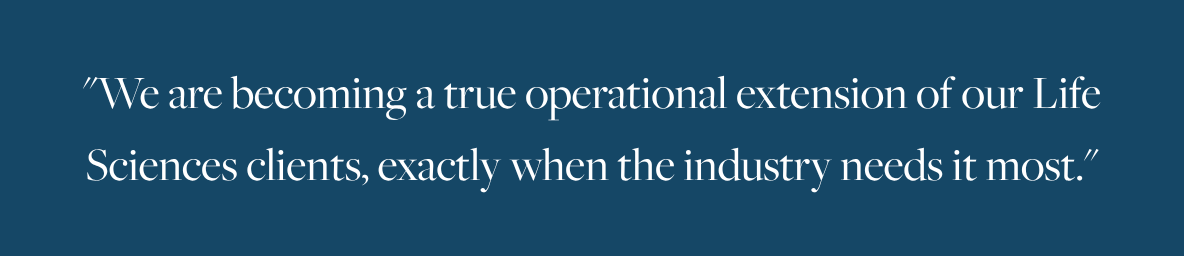
We are evolving from a trusted project partner into a true operational extension of our clients. By deepening our expertise and strengthening our service models, we are removing friction for scientific teams so they can stay fully focused on discovery. I am energized by the opportunity to scale this approach and support increasingly complex environments.
What trends will shape Life Sciences operations in the next few years?
Organizations are becoming more intentional about how they use space and are prioritizing flexibility and efficiency. Transitions are also becoming more complex due to hybrid work, shared labs, and increased digital infrastructure. These factors make disciplined operational planning and strong, experienced partners more important than ever.